
You have an outdated webbrowser. The website might not work correctly.
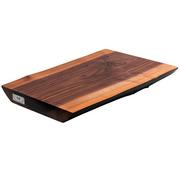
A walnut cutting board is the elegant choice among wooden cutting boards: deep chocolate brown, with a fine, closed grain and a calm pattern. It complements a dark worktop beautifully, while creating an attractive contrast with a light one. The wood is slightly softer than acacia or oak, and your knives will notice: the surface gives slightly under the cutting edge, putting less strain on it. For anyone who takes their kitchen knives seriously, that is the main benefit.
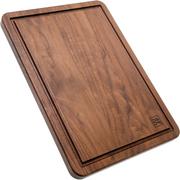

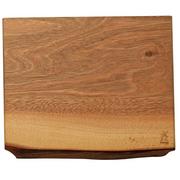

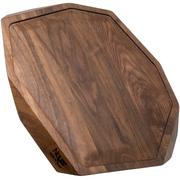

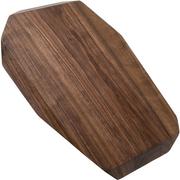


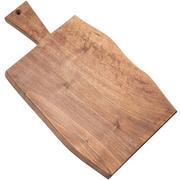

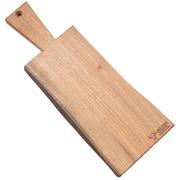

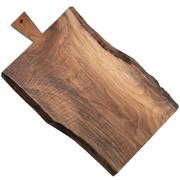

A walnut wood cutting board is medium-hard, which is exactly why knife makers enjoy working with it. Hard enough to last for years with proper use and maintenance, yet soft enough not to dull the edge of your chef's knife. The dark colour and calm grain make light signs of use less noticeable, although deeper cut marks will still be visible.
The way the wood is constructed also matters. A walnut end grain cutting board, for example, has the ends of the wood fibres facing upwards. When you cut, the knife edge moves between these fibres rather than cutting straight across them. This makes an end-grain board particularly gentle on your knives and helps small cut marks blend into the surface. The trade-off is that these boards are generally thicker, heavier and more expensive.
Size is another consideration. A large walnut cutting board gives you plenty of room when preparing several ingredients, carving meat or working with larger vegetables. Its extra weight can also make it feel more stable on the worktop. If you mainly chop smaller ingredients or have limited kitchen space, however, a small walnut cutting board may be easier to handle and store.
Do expect a higher price. Walnut wood grows slowly and is therefore more expensive than, for example, beech or acacia wood, so you are buying a long-lasting investment rather than a board for quick jobs. If you are looking for the best walnut cutting board for your kitchen, pay attention not only to the appearance, but also to its dimensions, thickness and construction. The right choice depends on how much space you have and what you usually prepare.
Comparing teak vs walnut cutting board options? Both woods have their advantages. Walnut has a darker, more understated appearance and is pleasantly gentle on knife edges, while teak naturally contains more oils and is particularly resistant to moisture. Teak can, however, contain more silica, which may have a greater effect on a finely sharpened knife edge over time. Your choice therefore depends on whether you prioritise knife friendliness, moisture resistance or simply the look and feel of the wood.
Keep the wood dark and nourished with a monthly treatment with cutting board oil, and keep it out of the dishwasher. Without oil, walnut will turn dull over time. Would you like to compare the wood types side by side? You can do so in our range of wooden cutting boards.