
You have an outdated webbrowser. The website might not work correctly.
With an end-grain cutting board, the wood is, as it were, standing upright. This means your knife cuts between the wood fibres rather than across them. After cutting, those fibres largely spring back into place. This has two advantages: your knife stays sharp for longer and cut marks are less visible because they partly close up again. That is exactly why you often see end-grain cutting boards in butcher's shops and professional kitchens, often in a satisfyingly sturdy thickness.
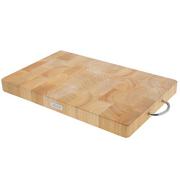

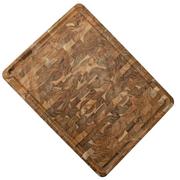

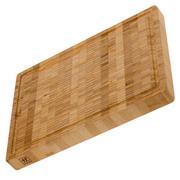

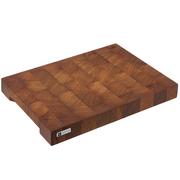


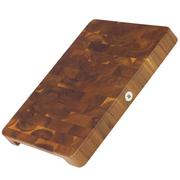


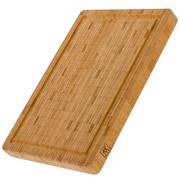

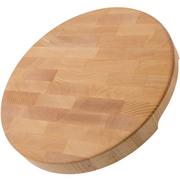

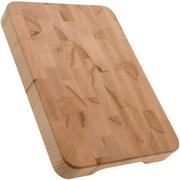

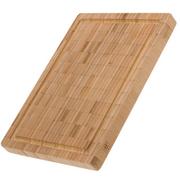

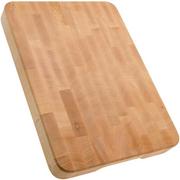

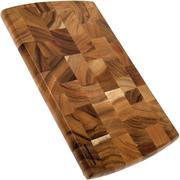


An end grain wooden cutting board is recognisable by its block pattern: end-grain surfaces side by side, glued together into one board. This makes such a board substantial. Expect a thickness of three to five centimetres and a weight that needs two hands to lift. That weight is exactly what you want, because the board stays where you put it.
There is a downside to this construction too. End grain absorbs water along the fibres, which is precisely the direction in which the wood can move. So never leave an end grain board wet or put it in the dishwasher. Rinse it, dry it immediately, leave it upright to dry and oil it a few times a year with cutting board oil: it will outlast you. Find the full explanation in wooden cutting board maintenance.
Looking for the best end grain cutting board? End-grain wood is gentle on your knives and less prone to deep cutting marks. With the right care, a quality end-grain cutting board will last for years.
Still deciding between end grain and a regular long-grain board? Our cutting board buying guide lists the differences. Find all wood types and versions under all wooden cutting boards. Or view all cutting boards.